As the blockchain industry matures, one factor continues to separate leading networks from the rest: cost efficiency. High transaction fees have long been a barrier to mass adoption, pushing developers and users to search for more practical alternatives.
In this evolving landscape, BNB Chain has steadily carved out a position as one of the most cost-effective blockchain infrastructures available. With a focus on scalability, affordability, and real-world usability, it is becoming an increasingly attractive option for developers, businesses, and everyday users.
Why Low-Cost Infrastructure Matters More Than Ever
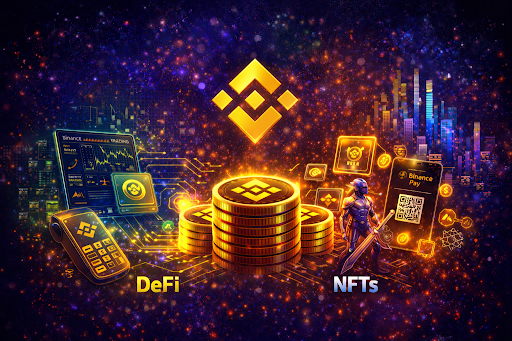
Blockchain technology has moved beyond experimentation. Today, it supports decentralized finance (DeFi), gaming, NFTs, and enterprise applications. But for these use cases to scale globally, networks must remain accessible.
High gas fees—seen on some major blockchains—can limit participation and reduce efficiency. In contrast, low-cost networks enable:
- Frequent transactions without significant overhead
- Broader participation from users in emerging markets
- Scalable applications with sustainable operating costs
BNB Chain has focused heavily on solving these challenges, making it a practical choice for large-scale adoption.
The Core Strength of BNB Chain
BNB Chain’s infrastructure is built to balance speed, cost, and performance. Its architecture allows for:
- Fast transaction processing with low latency
- Significantly reduced fees compared to many competitors
- High throughput capable of supporting large user bases
This combination has helped BNB Chain attract a wide range of projects, from DeFi protocols to gaming platforms.
A Growing Hub for DeFi and Web3 Projects
One of the strongest indicators of a blockchain’s success is its ecosystem. BNB Chain has seen consistent growth in decentralized applications, particularly in DeFi.
Developers are increasingly choosing BNB Chain because it offers:
- Lower deployment and operational costs
- Access to a large and active user base
- Compatibility with existing Ethereum-based tools
This has created a network effect, where more projects attract more users, and more users attract even more development.
Developer-Friendly Environment
Ease of development plays a major role in blockchain adoption. BNB Chain provides tools and frameworks that make it easier for developers to build and scale applications.
Its compatibility with the Ethereum Virtual Machine (EVM) means developers can migrate or build applications without needing to learn entirely new systems.
In addition, incentive programs and ecosystem support have helped attract both startups and established projects.
The Role of the Binance Ecosystem
BNB Chain benefits from its close association with Binance, one of the largest cryptocurrency exchanges in the world.
This connection provides:
- Strong liquidity for assets within the ecosystem
- Increased visibility for new projects
- Seamless integration between trading and blockchain usage
While BNB Chain operates independently as a blockchain, the broader Binance ecosystem continues to support its growth and adoption.
Institutional and Enterprise Interest
Beyond retail users, institutions are also exploring blockchain solutions that prioritize efficiency and scalability.
BNB Chain’s low-cost infrastructure makes it suitable for:
- Payment processing systems
- Supply chain solutions
- Tokenization of assets
- Enterprise-level decentralized applications
As businesses look for ways to reduce operational costs while improving efficiency, BNB Chain presents a compelling option.
Challenges and Competition
Despite its strengths, BNB Chain operates in a highly competitive space. Other blockchains are also focusing on scalability and low fees.
Key challenges include:
- Maintaining decentralization while scaling
- Navigating global regulatory pressures
- Competing with emerging layer-2 solutions
Addressing these challenges will be critical for sustaining long-term growth.
The Future of BNB Chain
Looking ahead, BNB Chain’s focus on affordability and scalability positions it well for continued expansion.
As Web3 adoption increases, the demand for efficient infrastructure will only grow. Networks that can offer both performance and low costs are likely to lead the next phase of blockchain innovation.
BNB Chain appears to be aligning itself with this future, focusing on practical use cases rather than hype.
Final Thoughts
BNB Chain’s rise as a low-cost blockchain infrastructure highlights a broader shift in the crypto industry. Utility, efficiency, and accessibility are becoming more important than ever.
By addressing these needs, BNB Chain is not just competing—it is positioning itself as a key player in the global blockchain ecosystem.
As adoption continues to grow, its role in powering the next generation of decentralized applications could become even more significant.